
EPCI Support
Engineering · Procurement · Construction · Transportation · Installation & Pre-commissioning
Past Projects
SHELL NIGERIA (SNEPCO)
Bonga Field Survey Support
Life of field survey support with 38 metrology operations and 37 well marking campaigns in 1,000-1,200m water depth.
TotalEnergies
Egina & Akpo Fields
OIMR campaign support (2018-2023) including metrology operations and wellhead positioning up to 1,500m water depth.
CHEVRON NIGERIA LIMITED
Agbami Field Operations
Continuous survey support for OMR campaigns from 2009 to present including inspection surveys and positioning.
MULTI-FIELD OPERATIONS
Various Nigerian Fields
Survey support across Anyala-Madu, Oyo, ABO Phase 3, and Meji from 5m shallow to 1,500m ultra-deep water
Integrated gas supply system development — engineering, fabrication, and installation of rigid pipelines, subsea manifolds, flexible systems, and associated infrastructure.
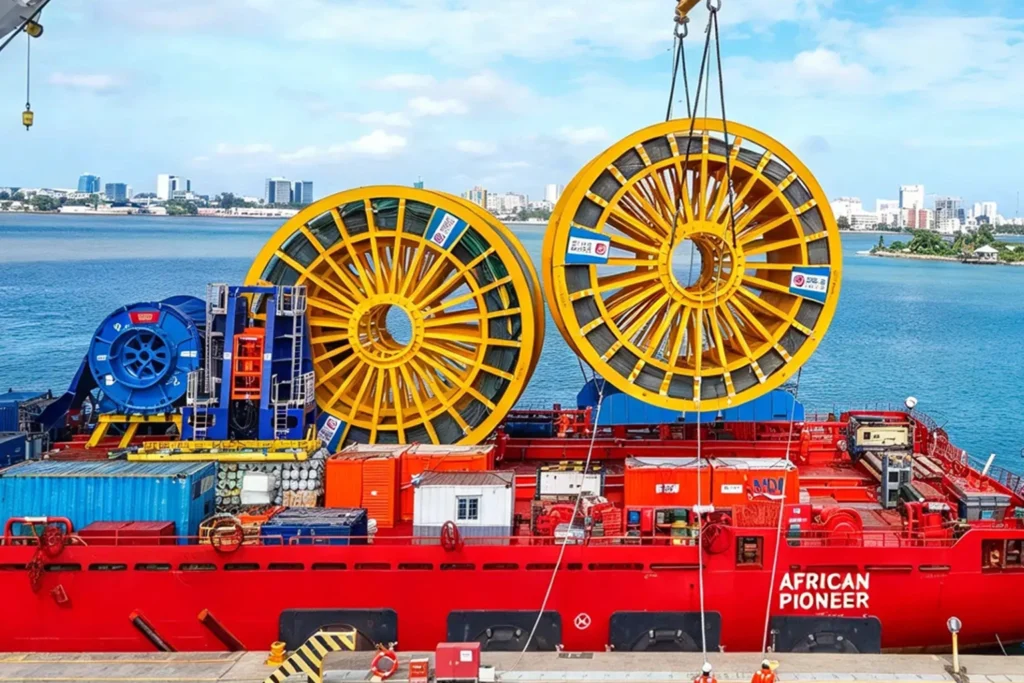
First Integrated Gas Supply System FIGSS Project
Complete EPCI delivery of an integrated gas export system encompassing ~22 km rigid pipeline with Zap-Lok technology, subsea structures (SSIV, PLEM, Pig…
Discover moreFirst Integrated Gas Supply System FIGSS Project
Marine Platforms is delivering the full Engineering, Procurement, Construction, Transportation, Installation and Pre-commissioning (EPCI) scope for the First Integrated Gas Supply System (FIGSS) for First Exploration & Petroleum Development Company (FEP). This landmark development will connect the FPSO Abigial to an onshore gas-processing facility(OGGS) through an integrated system of rigid pipelines, subsea structures, flexible flowlines, control umbilicals and topside interfaces.
The execution model brings two interdependent work packages under coordinated delivery. Campaign 1 covers the rigid pipeline and subsea structures using Zap-Lok mechanical joint technology, while Campaign 2 covers the SURF flexible systems, umbilicals, tie-ins and commissioning. By managing engineering, offshore installation and system integration as one programme, Marine Platforms reduces interface risk and supports a controlled path to operational handover.
Part A — Rigid Pipeline & Manifolds
Engineering, procurement, construction, transportation, installation and pre-commissioning of rigid pipeline and subsea manifold infrastructure.
~22 km Rigid Pipeline Zap-Lok Pipelay
Engineering, procurement, construction, transportation, installation and pre-commissioning of a ~22 km, 10″ rigid pipeline from FLG-1 to FLG-2 using Zap-Lok mechanical joint…
Discover moreSubsea Structures SSIV · PLEM · Pig Receiver
Engineering, fabrication, transportation, installation and pre-commissioning of SSIV Manifold 2, Pipeline End Manifold (PLEM), and Temporary Subsea Pig Receiver with valves and…
Discover moreTrenching & Burial
Trenching and burial of the two flexible sections and the ~22 km rigid pipeline — minimum cover depth of 1 metre from…
Discover more~22 km Rigid Pipeline Zap-Lok Pipelay
The project
Engineering, procurement, construction and installation of a ~22 km gas export pipeline
Marine Platforms Limited is executing the full Engineering, Procurement, Construction, Transportation, Installation and Pre-commissioning (EPCI) of a ~22 km, 10″ rigid pipeline connecting the rigid/flexible pipe interface flange FLG-1 to FLG-2. The pipeline forms the backbone of the integrated gas export system, transporting gas from the FPSO to the onshore gas processing facility.
The pipeline is being installed using Zap-Lok mechanical joint technology — a proven connection system that enables rapid pipelay without welding, using factory-applied sleeves and taper connections. This technology significantly reduces offshore pipelay duration compared to conventional welded joints, making it particularly advantageous for the ~22 km run length in the Niger Delta offshore environment.
Current status
Pipe fabrication completed — beading and pinning for mechanical pressing underway
Pipe fabrication has been completed successfully. The linepipe procurement, Zap-Lok joint assembly, and pipe coating application phases are now complete. The pipeline is currently undergoing beading and pinning operations in preparation for mechanical pressing — a critical preparatory step that ensures proper joint integrity and alignment ahead of the offshore pipelay campaign.
Factory Acceptance Testing (FAT) of mechanical joints has been completed according to schedule. Offshore installation is planned for the fourth quarter of 2026, following completion of loadout engineering, marine spread mobilisation, and final pre-lay survey. The pre-engineering survey of the ~25 km corridor has been completed, providing the seabed characterisation and route data required for final installation engineering.
Subsea Structures SSIV · PLEM · Pig Receiver
The project
Engineering, fabrication, installation and commissioning of three key subsea structures
Marine Platforms Limited is delivering the full Engineering, Fabrication, Installation and Commissioning (EFIC) scope for three critical subsea structures that form the nodal infrastructure of the gas export system: SSIV Manifold 2, the Pipeline End Manifold (PLEM), and a Temporary Subsea Pig Receiver.
Each structure is being engineered with integrated actuated and manual isolation valves, field instruments, and ancillary components. Subsea mattresses will be installed where necessary for seabed protection and on-bottom stability. The structures are designed for the specific flow conditions, pressure requirements, and environmental loading of the Niger Delta offshore environment.
Current status
Structural fabrication ongoing — offshore installation aligned with Q4 pipeline campaign
Fabrication of the SSIV Manifold 2, PLEM, and Temporary Subsea Pig Receiver is currently ongoing at the fabrication yard. Structural welding, valve integration, and instrument fit-out are proceeding according to the project schedule. Factory Acceptance Testing (FAT) is planned to coincide with fabrication completion.
Offshore installation of the subsea structures is aligned with the Q4 2026 pipeline installation campaign, ensuring coordinated deployment and tie-in operations. Loadout engineering and sea-fastening design are being finalised in parallel with fabrication activities.
Trenching & Burial
The project
Trenching and burial for mechanical protection of pipeline and flexibles
The trenching and burial scope covers mechanical protection of the two flexible pipeline sections and the ~22 km rigid pipeline by trenching and burial below the seabed. Minimum cover depth is specified as 1 metre from mean seabed to the bottom of pipe. This scope is a mandatory component of the EPCI delivery, ensuring long-term integrity of the pipeline system in the dynamic offshore environment.
The flexible sections to be covered include the FLG-2 to PLEM flexible section and the PLEM to OGGS flexible section. The rigid pipeline section spans the full ~22 km from FLG-1 to FLG-2. Trenching methodology will be selected based on seabed conditions identified during the pre-engineering survey.
Part B — SURF Infrastructure
Transportation, installation and pre-commissioning of flexible risers, flowlines, spools, umbilical systems, and topside hook-up.
Flexible Riser & Flowlines
Transportation, installation and pre-commissioning of 8″ × 310m flexible riser, 10″ × 1,376m static flowline, and 14″ rigid spool connecting PLEM to…
Discover moreSSIV Umbilical System
Transportation, installation and pre-commissioning of 230m umbilical including TUTU, SUTA, flying leads and jumpers — with topside termination, cable routing, and safety…
Discover moreSubsea Tie-ins & Hook-up
Subsea tie-in of export gas flexibles to the rigid pipeline, SSIV manifold, and PLEM. Hook-up of the gas export system to the…
Discover moreUmbilical J-Tube & Installation Engineering Where
Engineering design, procurement, fabrication, transportation and installation of umbilical J-tube including subsea clamps and ancillaries. Site assessment and methodology development.
Discover moreSystem Commissioning & Integration
Full integration commissioning of the SSIV umbilical with the platform safety system — cable routing, tubing connection, control panel retrofit, and safety…
Discover morePre-commissioning of Entire Lines
Full pre-commissioning of the complete gas export system — rigid pipeline, flexible flowlines, SSIV manifold, PLEM, and all subsea infrastructure — including…
Discover moreFlexible Riser & Flowlines
The project
Transportation, installation and pre-commissioning of flexible riser and flowline systems
Marine Platforms Limited is delivering the Transportation, Installation and Pre-commissioning (T&I) scope for the complete flexible pipeline system connecting the FPSO to the onshore gas pipeline via the SSIV manifold and PLEM. The scope encompasses four distinct flexible elements, each with specific length, diameter, and function requirements.
The system includes an 8″ × 295m flexible riser from the FPSO to the SSIV manifold, a 10″ × 1,310m static flexible flowline from the SSIV manifold to FLG-1, a 10″ × 65m flexible spool from FLG-2 to the PLEM, and a 10″ × 102m flexible spool from the PLEM to the OGGS hot tap location. All flexibles are supplied with end fittings and OEM ancillaries, including two DBB valves on the static flexible pipes.
Current status
LLI procurement from OEMs underway — offshore installation aligned with Q4 campaign
The Long Lead Items (LLIs) are being procured from OEM ex-works locations with international logistics coordination for customs clearance, handling, and transportation to the offshore installation site. The 8″ flexible riser and 10″ static flexible pipes are being sourced from the OEM in China, with full end fittings and ancillaries. Offshore installation is planned for Q4 2026, coordinated with the rigid pipeline and subsea structure installation campaign.
SSIV Umbilical System
The project
Transportation, installation and pre-commissioning of 230m SSIV control umbilical
Marine Platforms Limited is executing the Transportation, Installation and Pre-commissioning of a 230m umbilical system from the platform to the SSIV manifold 2, including all termination units (TUTU, SUTA), flying leads, and jumpers. The umbilical provides hydraulic control, electrical power, and communication between the platform and the subsea SSIV system.
The scope includes all topside activities — umbilical stripping, routing up to the TUTU, termination, and integration with the platform safety system. The umbilical is being sourced from the OEM in the United Kingdom with full ancillaries, and transported to the offshore installation site with customs clearance and handling.
Current status
Umbilical procurement and J-tube engineering progressing in parallel
The umbilical LLI is being procured from the OEM ex-works location in the United Kingdom, with international logistics coordination for delivery to the offshore installation site. Detailed engineering for the umbilical J-tube — including subsea clamps and ancillaries — is underway, with assessment of piggy-backing on existing J-tubes or risers as a potentially more cost-effective alternative. A site visit to the platform has been conducted to assess the proposed J-tube route, TUTU location, and cable routing from TUTU to the Local Equipment Room (LER).
Subsea Tie-ins & Hook-up
The project
Subsea tie-in of flexibles and hook-up of the complete gas export system
Marine Platforms Limited is responsible for the subsea tie-in of all export gas flexibles to the rigid pipeline, SSIV manifold, and PLEM — ensuring seamless hydraulic and mechanical integration across the entire gas export system. The scope also encompasses hook-up of the gas export pipeline system to both the FPSO and the onshore gas pipeline system.
The umbilical tie-in scope includes subsea connection of the umbilical to the SSIV manifold (SUTA) and to the platform (TUTU), with all topside activities forming part of the contractor scope. This includes umbilical stripping, routing up to the TUTU, termination, and integration with the platform control systems.
Umbilical J-Tube & Installation Engineering Where
The project
Engineering, fabrication and installation of umbilical J-tube with site assessment
Marine Platforms Limited is delivering the detailed engineering design, procurement, fabrication, transportation and installation of an umbilical J-tube for the SSIV control umbilical, including subsea clamps and all ancillaries. The scope includes assessment of piggy-backing the umbilical on an existing J-tube or riser as a potentially more cost-effective alternative.
A comprehensive site visit to the platform has been conducted for on-the-spot assessment of the proposed J-tube route, ease of installation, umbilical termination end (TUTU) proposed location, and terminating cable routing from the TUTU to the Local Equipment Room (LER). The most cost-effective and safe installation methodology will be proposed following this site assessment.
System Commissioning & Integration
The project
Full integration commissioning of the SSIV umbilical with the platform safety system
Marine Platforms Limited is delivering the commissioning scope for full integration of the SSIV umbilical with the platform safety system. This encompasses routing and termination of approximately 20m of multicore control cable (2.5mm × 16 pairs) between the TUTU and the Local Equipment Room (LER), installation of cable trays and Unistrut supports, and implementation and testing of the SSIV safety logic within the platform safety system.
The scope also includes connection of approximately 10m of 3/8″ tubing from the umbilical hose termination point on the topside to the platform Well Head Control Panel, retrofit of the Well Head Control Panel to support the FIGSS SSIV, and flushing and cleaning of SSIV hook-up tubing to NAS 6 standards before integration. Pre-commissioning support completes the scope to ensure full SSIV installation readiness.
Pre-commissioning of Entire Lines
The project
Full pre-commissioning of the complete gas export system
Marine Platforms Limited will execute the comprehensive pre-commissioning of the entire gas export system — encompassing the ~22 km rigid pipeline, all flexible flowlines and spools, the SSIV manifold, PLEM, Temporary Subsea Pig Receiver, and all associated subsea infrastructure. The pre-commissioning programme ensures system integrity, cleanliness, and operational readiness prior to handover for production operations.
The scope covers the complete sequence of pre-commissioning activities: pipeline cleaning and gauging to verify internal diameter and remove construction debris; flooding with treated water or suitable medium; hydrostatic pressure testing to verify structural integrity and leak-tightness at design pressure; dewatering to remove test medium; and drying to achieve the required dew point specification for gas service. All activities will be executed in accordance with international codes, client specifications, and regulatory requirements.
Scope of work
Integrated pre-commissioning across all pipeline and subsea assets
The pre-commissioning scope is integrated across all system components. For the rigid pipeline, this includes pig launching and receiving operations, progressive cleaning runs, gauging plate verification, hydrotest pressure hold and monitoring, and final dewatering and drying runs. For the flexible systems, pre-commissioning encompasses pressure testing of individual flexible elements, spool verification, and integration testing with the rigid pipeline and subsea structures.
The SSIV manifold, PLEM, and Pig Receiver will undergo individual pressure testing, valve function verification, instrument calibration checks, and integration testing with the pipeline system. The complete pre-commissioning programme is sequenced to align with the offshore installation campaign, ensuring efficient handover from installation to commissioning and ultimately to operations.